This concept is an eye opener to learning and comprehension, this is one the tools I used in my academic years, that enable me to graduate with a perfect CGPA of 5.0, having all A throughout university and emerge as best graduating in law and the valedictorian of the 2025 set and I will still use employ this technique in my more academics years to come. I refer to this method of studying as Root Memorisatio
Root Memorisation is a process that boosts your understanding and recall through three phases: the understanding phase, the memorisation phase, and, lastly, the recollection phase. All three phases are essential to the overall goal of learning and getting a good grade.
Before moving on, let me highlight a flaw in our education system. Our educational system doesn’t really reward deep understanding; instead, it rewards the ability to recall and regurgitate what you learn, meaning your ability to memorise information. Although you might say What is the used since I’m not going to have a deep understanding of what I’m learning. Well, that’s how our brain also tricks us: we think we understand something by recalling specific information. For example, you are reading a text. You can remember what it states, your brain will then be like Oh yeah, I understand this, probably your lecture or friend, then explain that concept, and when you realise what it really means.
Now, this is where root memorisation steps in: it will enable you to gain a deep understanding of the material and recall it fluently. Before discussing how to use this concept of root memorisation, we first need to establish the link between knowledge and recollection, and then the need for memorisation.
Key to Understanding
The key to understanding is your ability to recall the information, which is why you and your friend can often remember the same information on a topic, but the viewpoint at which you both understand it is different; however, the brain still views that piece of information as understood due to your ability to recall it. Knowing this now, we are going to use this to our advantage.
The Need for Active Recall
Over the decade, active recall is no secret anymore; it has been tried and tested and proven to work. Active recall is one of the best ways to remember what you have read. Active recall is a learning method in which you continuously test yourself by pulling information from your memory rather than passively reading, rereading, or highlighting your notes. Active recall is known as the best method for learning and comprehension, and you can practice active recall in various ways. The best way I like to practice active recall is using Flashcards (both physical and Digital), practice tests, and quizzes, preferably with a study partner.
You can use any app to implement active recall, and there are a lot out there. My saying is always the simpler the better, and they why I often limit myself to just these two apps: Anki and Quizlet. (More on active recall on its own dedicated post)
Mistakes students make
However, although active recall has been seen as a breakthrough tool students now use to prepare for their exams, most students don’t use it in the most effective and efficient ways.Oftentimes, student tends just to push all the information they want to learn into a flashcard format, and then they find it hard to recall it, and they view it like “Oh damn, I don’t understand this concept”. Another set of student will actually be able to recall if not 80% or more of their flashcard but often time when it comes to exam or test time, they forgot it all or remember it in bits, and no, this is not due to your village people, nor is it bad luck, you just have figured out the three steps of learning.
Understanding Root memorisation
Now, Root memorisation is divided into three stages, which I also refer to as the three stages of learning: Firstly, the Understanding Phase; then the Memorisation Phase; and finally, the Recall Phase.
Understanding Phase: This phase is the beginning of your learning often time this phase its either you are viewing the material for the first time or reviewing the material it has already been thought in class (Side note: Guys that is why is important to attend lectures, so when you are reading the material for you it more of a review to deepen your understanding of the material since it has already been taught in class, this advice is mainly for university student due to the freedom that come in university.).
Now in the understanding phase, I will just advice you to read the material and make notes, not take notes, I repeat, make notes. Some people often like to take notes, and this is like copying verbatim, word-for-word, which isn’t really helpful. How to efficiently take notes will be covered in another video. In Summary, in the understanding Phase, You Read and make notes, simple enough.
Now, this is where students go and jump and create flashcards for active recall. Yes, you have made your note, but you have not yet memorised the concept’s structure; instead, it’s just copied and pasted into a flashcard app.
Memorisation Phase: Now, the memorisation phase is key to perfect recall. Before you put that information on a flashcard, you have to structure it to the best of your understanding, and I use various techniques in my memorisation. I will discuss every point later in this post, but the method I will touch on today is IMAGERY. For me, this is the most powerful technique in the learning space. Now you have often heard the saying An Image speaks a thousand words? And in life, anytime someone gives you directions to a particular place, they use landmarks and images to lead you to the right place. No matter what type of learner you are, visual, auditory, reading/writing, or kinesthetic. (I really don’t believe in all that because a valid learner implements all types of learning.) You cannot deny that an image passes more information than text.
I usually have a tutorial session, especially during my 400-level period when we are split into tutorial groups. Two of my coursemates, who were joyfully gisting after the tutorial, asked me for my notes to see if they could photocopy them. They were shocked to see a drawing (Stick man, concept drawing) with little notes and sections. They just handed it over to me, and we laughed about it.
Now, let me give you a step-by-step process for implementing root memorisation in your academic work. As a law student, I will use two cases as illustrations. Cases Example 1, Burton v Davies, “the plaintiff was riding in a motor vehicle driven by the defendant. He prevented the plaintiff from getting out of the vehicle at a certain place by driving past at excessive speed. Held: that driving a motor vehicle past and preventing a passenger from alighting at his destination is false imprisonment.”
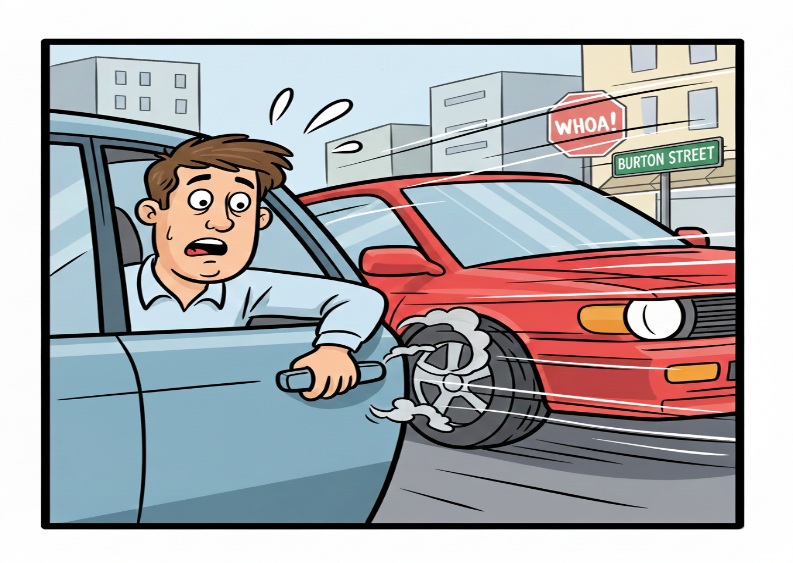
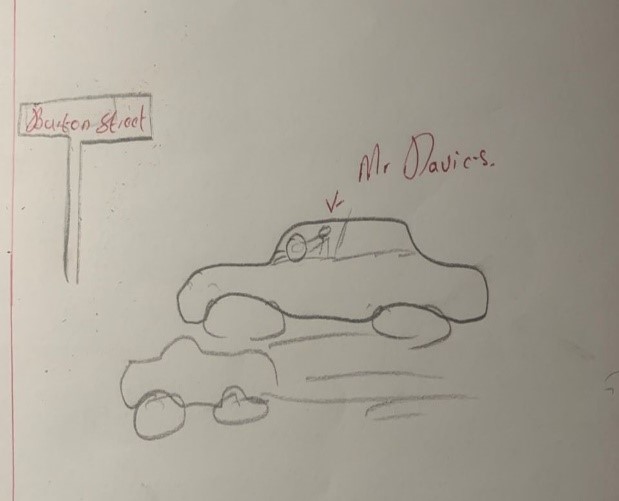
Now, for this example, I’m going to use the facts of the case to draw my image, so I can remember this case as supporting authority when explaining false imprisonment. Let’s call the street Burton Street and the driver Mr Davies. Looking at or remembering the image alone will allow you to recall the case and the fact. Now use this image in your flashcard.
Case Example 2, Black v Fife Coal Co. Ltd, the husband of the plaintiff widow was killed by an outbreak of poisonous gas in the coalmine of the defendant company, who were his employers. In an action for damages, the court held that the defendant company was liable for the negligence of its servants and for their failure to comply with the safety rules prescribed under the English Mines Act.
This is a case authority supporting the concept of negligence. Now, we are going to use the case name instead of the facts to draw an image for deep memorisation, and then use it in our flashcard.
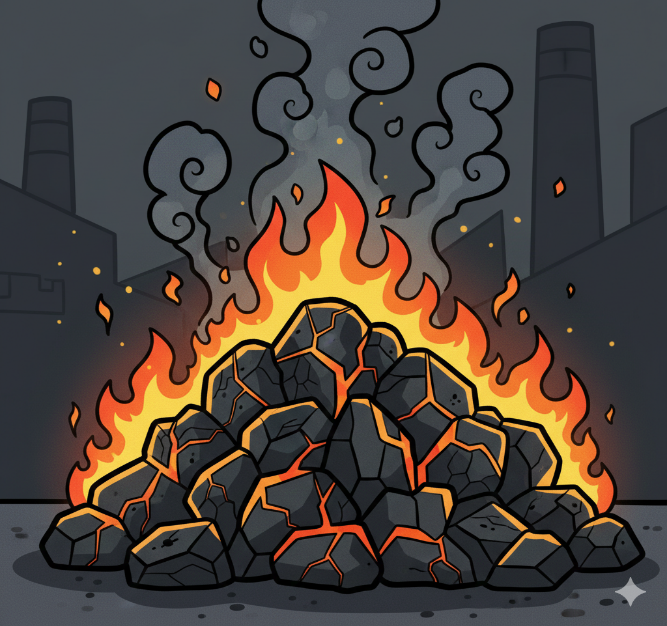
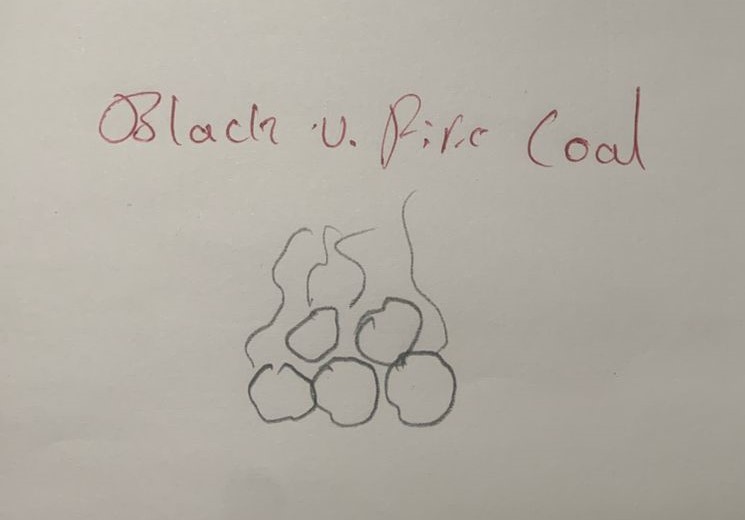
Just like that, I can recall the name of the case, Black v. Fifa Coal, from a picture of black coal.
I recently listened to Jim Kwik’s podcast, “Activities and Acts That Are Not Good for the Brain,” and I will use it as an example to explain the concept of root memorisation to you. I will limit the list to 5.
1. Eating properly
2. Negative self-talk
3. Not moving your body
4. Being around negative people
5. Dirty environment

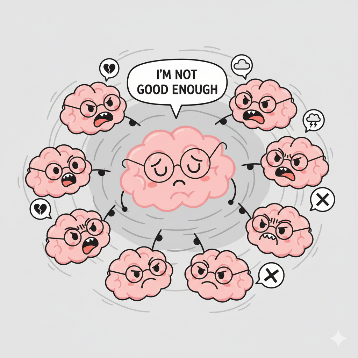
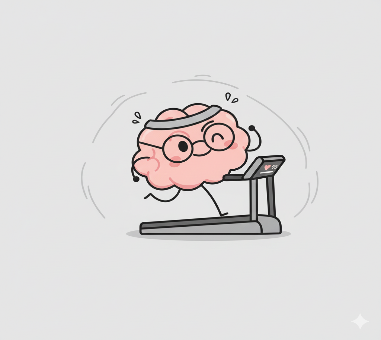
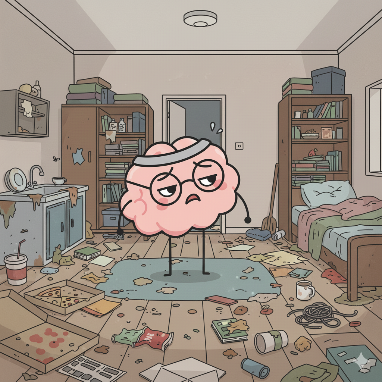
Now let memorizes this with imagery in root memorization, now let imagine or draw a cartoon animated brain doing the following task and in various scenario, for the 1st one which is eating properly imagine a brain eating junk food, now that brain that is eating junk food, his conscious is judging him that number 2, (Now another technique I will touch on in root memorization is grouping) number 2 and number 4 are similar information, so those let imagine or draw that as judging himself his friends are also judging him too instead of motivating him, number 3 draw a brain doing exercise, lastly number 5 draw a brain in a dirty environment. These images you have drawn or imagined are going to form the basis of your flashcard, either at the front or back of the card, for active recall.
Conclusion.
Including images in your Memorisation phase will help you memorise faster and, in turn, improve your understanding of the information. This is just one of the methods I utilise in the memorisation phase to deepen my knowledge and recall of the information.
One piece of advice I would give you is that your drawing doesn’t have to be perfect or detailed; sometimes, only you will be able to understand what you have drawn, and that’s not a problem as long as the information is conveyed in the image. I sometimes use stick men; the funnier the picture, the better it will be recalled.
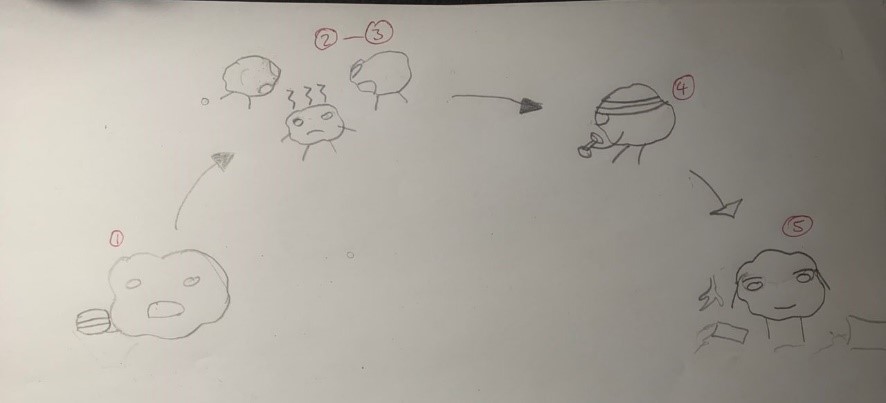
This is my own personal drawing of the illustration of the brain and the habits that are not good for the brain, pretty funny. Until next time, be positive, be patient and be productive.